Thursday, September 21, 2017

Unexpected Companions


Man is a social animal, he is evolutionarily and biologically hardwired for interacting with others, understand their feeling and intentions.


Of the various social activities that humans partake, eating food in one of the commonest.Food is also an occasion for sharing. A famous quote that says “ families that eat together, stay together.”  For as long as I remember, my father has always encouraged eating meals together on a dining table.This habit stuck. When I moved to the hostel, I would always seek a bunch of people in the Mess with whom to share a meal with. After getting married, my husband knowing well my need for company during mealtimes often came home for lunch break. However, increasing workload and the distance of the home from office soon made it difficult to have lunch together. Lunch then started seeming like work. In order to make it enjoyable, I started calling friends over on some days or eating while skype chatting with them. However, this could not be done every day. Finally, I found my perfect companion, a radio program at lunch hour, ‘Fresh air’ hosted by Terry Gross. Terry would call on eminent authors, thought leaders on her show and ask them about their latest book or movies. The conversation between Terry and the various guests gave me a vicarious sense of someone talking to me and that was good enough to make my lunch appetizing again.
Susie with her soft toys as companion for tea


I commute to work on my Activa, it is a lonely activity. Mumbai rains made it almost impossible for me to use my bike, I had to depend on public transport, auto rickshaw and uber. Initially, I disliked not having my own bike but slowly I started warming up to other modes of transport. Buses and trains gave me my daily share of walking and exercise, Uber and auto rickshaws my daily dose of gossip! I have often ended up having interesting conversations with auto and Uber drivers. I now know that auto rickshaws cost about 3 lakhs, that most rickshaw drivers in Mumbai are from Uttar Pradesh or Bihar, one of the auto drivers was a “Thakur” from my grandfather’s village in Bihar! He told me how people in Bihar take pride in not working and how Mumbai is the number 1 destination for anyone seeking work or money.  He said in Hindi “ Mumbai me paisa udta hai, pakadne wala chahiye” (There is surplus money in Mumbai, you just need someone to catch it).  An uber driver shared with me how uber is Godsend for him. He had come to Mumbai to tide over rough times and started as a driver for a rich lady, but she would never pay him on time despite driving 17 hours a day. He told me he loves how with Uber you can be your own boss, take rides when you want and how your salary gets credited to you on time without asking anyone! Another uber driver shared his observation about how foreigners are polite and never make them wait and respect their service, unlike the Indian counterparts. He also shared stories of how people game uber pool! I will not disclose it over this forum, lest more people abuse the service. This and a lot more snippets of real-life incidents. I really enjoy these conversations! It gives me insight into people’s daily lives, those people whose path would not ordinarily cross mine. Sometimes it makes my problems in life seem trivial.


I also love traveling alone in trains. Here too I have many memories of meeting people from different walks of life: a teacher, a journalist, a politician, wildlife photographer and animation artist are some with whom I have shared some intense conversations with. Most of these conversations have taken place 5-8years back. I don’t remember their names, I won’t remember their faces if I meet them again, but I do remember the conversation I had with them and how it made me feel.I remember listening intently to the teacher, let’s call her Mrs. Parthe, as she pointed out the social changes she is seeing in the younger generations who are given phones and I-pads early in their life. A young journalist in a small Tv channel of region language described how many times, the news is created in the studio itself (implying they can be fake). A handsome wildlife photographer who showed me the pictures he had clicked, an animation artist who described how she never felt like she is working because she loved what she did. The conversation I had with an old MLA of a communist party was unique because it took place despite the language barrier. He only spoke Bengali, I could only speak Hindi and English, yet we had a healthy debate about foreign direct investment ( which was hot topic those days). For once I felt I had met an honest politician, who cared deeply for the people who elected him! He told me that he thinks that foreign direct investment is just legitimizing what the British Raj did when it ruled over us! How it looks good in newspapers but what it actually translates into for the poor people of that region, sighting ‘Singur incident’ as an example.


I am glad I have finally penned down some of these incidents while I still remember them. As times change I hope technology comes up with a  real life “Pensieve 1” where I can revisit my happy memories.

PIc taken from: https://www.hp-lexicon.org/wp-content/uploads/2017/01/dumbledore-pensieve.jpg


Pensieve is a term created by JK Rowling in Harry Potter series
I use the Pensieve. One simply siphons the excess thoughts from one's mind, pours them into the basin, and examines them at one's leisure. It becomes easier to spot patterns and links, you understand, when they are in this form."—Albus Dumbledore explaining what a Pensieve is.




Friday, July 7, 2017

Taming of the shrew


As the clock struck 9 am, I knew she was not going to come. Grumpily I steeled myself to the task ahead:  washing piles of dishes and sweeping and mopping the house. I have often tried to understand the basis of the sudden and indefinite leave that mausi (my house help) tends to take ever so often…..

“Bais”(house -help) are an integral part of an Indian household. Witnessing the dynamics between my mother and the maids during my growing up years had conditioned me to be wary of them. I had hoped that I would never have to deal with them myself. For the first 3 years of my married life, this wish had come true. 2 years in the USA and 1 year with my in-laws were comfortably 'Bai-free' for me. But then every party comes to an end: Jayesh and I moved out to live in Mumbai. Even then for the first 2 months I postponed the eventuality. This invariably meant that Jayesh and I had to share the household chores. As all married people know, protracted period of such sharing can lead to unhappiness. Jayesh started cajoling me to keep a bai. This is the conversation that ensued:

Aditi “ I am very uncomfortable at the thought of having  someone to work under me”

Jayesh ( who had recently taken up the job as a technical manager): “ Even I was not comfortable initially, but it is not that bad. In life it is important to learn to delegate tasks. You will realise you are less tired and have more time to do all the reading and blogging that you are unable to do.”

 Reluctantly, I gave in ………..  Initially, I used to prepare what to tell her, later the tasks were set and I didn’t need to interact much. I avoided giving her any instructions, if I was unhappy with something she did,I simply re -did it after she left. For about a month all was smooth sailing. Then  it began: her frequent and unannounced absentism which would last anywhere between 1 - 15 days . It was not the absentism that annoyed me, rather the randomness of it: it could happen anytime for any number of days, unannounced and I would be left in anticipation. I have often tried to ask her reasons for such behaviour. 95% times her pretext is:  some distant relative who had a drinking problem has passed away suddenly due to liver failure. In the last 1 year at least 7 people of her extended family members have died of liver cirrhosis. Creativity is not one of her biggest virtues!

All I ask of her is to give me a heads up: while she cannot pre- empt someone’s sudden death (the ingenuity of this excuse), she can definitely give a rough idea of how long she would be away.  I’ve requested her to give me a call, even a missed call will do- that doesn’t happen, reason : ‘balance nahin tha’. Okay then can you please receive my calls : no that doesn’t work either, reason: ‘the phone fell in water and the battery is destroyed.’

In a bid to see things from her perspective, Jayesh and I felt that maybe she does what she does because her work is not motivating enough, maybe she doesn’t feel appreciated. Giving her good quality products to work with, keeping all the dishes pre-rinsed and neatly stacked: were attempts to effect change in her motivation levels. This didn’t help one bit.  While we were still grappling with her bunking problem we also discovered her habit of selective listening. For example if I tell her: I am going out for the weekend please come to work on Monday morning. She conveniently hears the ‘out for the weekend’ very well but not the ‘come back to work on Monday’ bit.  All the managerial tricks I could find in the Harvard business magazine: cajoling, giving  incentives, being stern: have failed!  Since she is so well known in her community it is not even possible to replace her. No new bai will take this job unless mausi gives the go ahead! It is a stale -mate: take it or leave it!! It is like heads she wins and tails she wins too! I think it is important for women to be able to identify with this feeling. It gives them a taste of their own medicine: makes them feel exactly how their husbands feel most of the times!
http://newseastwest.com/wp-content/uploads/2015/04/My-Choice.jpg


I have given up trying to tame her in any way now, instead I have tamed my expectations: something I learnt from my mum -in- law. She always tries to see the good in every situation and has lowered expectations of others. So now every-time I have a surprise from mausi: I see it as an opportunity to re-arrange my crockery, do a thorough cleaning of the kitchen shelves and fridge. Doing dishes revives the old singer in me and makes the task enjoyable. It also gives Jayesh and me one more common task to bond over :)


https://rampages.us/pmcfarline/wp-content/uploads/sites/7369/2015/06/calvin-on-lowering-expectations.jpg


Friday, March 31, 2017

Sustainable Shopping?


It all began with me trying to find a word opposite of shopaholic. My husband and I have never really been big on shopping and wanted a term to describe ourselves. Turns out, there is no antonym for shopaholic; there is however a condition called “Officinaphobia” which means fear of shopping. Phobia is an extreme or irrational aversion to something. Our distaste for shopping on the other hand is moderate and quite rational.
Shopping is a difficult optimization problem for me. The following goes on in my mind when I buy things:
 Space factor: Where will I keep it? We stay in a rented 1 BHK in Mumbai and don’t have enough space for anything beyond the essential items
 Maintenance factor: How much of maintenance will the stuff require? Most things need dusting, cleaning, servicing
Cost factor: Is the purchase a value deal? Will I require it often enough to justify the purchase, will it make the task at hand easier? 
Time factor: is my time well spent researching from the ample choices. How long will the stuff last?
As is apparent from the above Venn diagram, in the universe of things, my sweet red spot is quite small.
Just yesterday, Jayesh and I went shoe shopping. Our less than 6 months old shoe had torn off and was irreparable. After spending 2 hours I managed to get a new pair for myself. Jayesh decided to use his old but functional sneakers as none of the shoes fit the problem statement he wanted to make purchase for.  
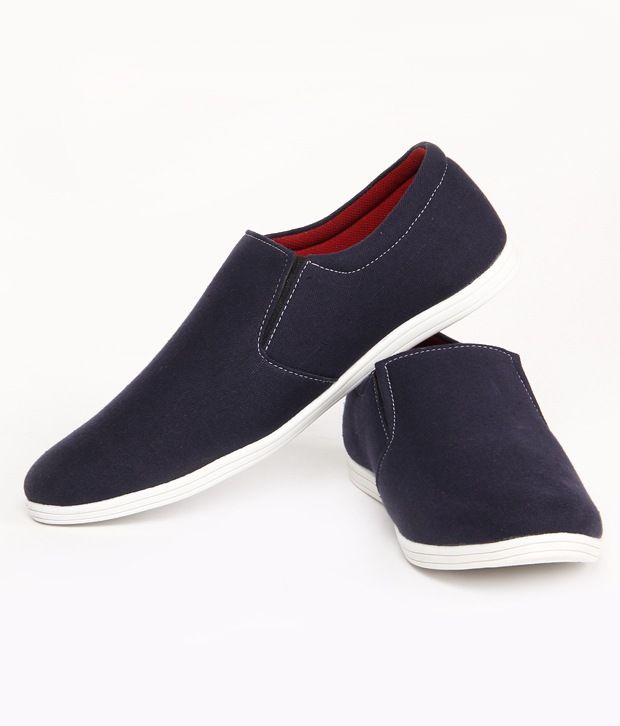
Consider the sample problem: To buy a long lasting (1.5- 2 years) pair of slip- on lace-less shoes (popularly called loafers)  that can be used for riding a motor bike and withstand the wear and tear of the foot controlled gear. 
Loafers

After scanning several stores and spending about 2 hours, we realized that such a shoe does not exist. None of the shop owners were ready to give a warranty of more than 3 months on their loafers, irrespective of the price and brand of the shoe.
What were our options?
1. Change geared bike to an automatic one
 2. Make do with the old pair sneakers with laces and learn to secure them well enough so that it does not come undone often
3.  Be a loafer who can afford the time to buy new loafers every 6 months.
We went with option 2 that did not involve any further purchase. The whole shopping –optimization- exercise left us annoyed and energy-sapped. I wish we could ‘outsource’ buying certain items to someone else: a personalized shopping aide –of- sorts. That however, may just shoot up the ‘Cost factor’!

Shopping for me is a chore and as long as it is basic essentials: grocery, vegetables, major long term purchases like fridge, washing machine, two- wheeler, I do my duty fairly well. It is when it comes to things like: clothes, cosmetics, mobile phones, or even TV that my head starts reeling and I start procrastinating. My husband and I have been postponing the decision to buy a television for 4 years now. It is not that we have not tried. The TV market seems to be in some transition; the smart TVs’ are new and the pocket friendly models all have a life span of 2-4 years. We were looking at a more long term investment which was not available. We never ended up getting a TV.  Often times we rationalize our inability of zero in on a TV as good riddance. It helps us spend more quality time together: going out, socializing, reading a book or playing board games.


My habits and expectations were shaped in the 1980's and 1990's when India was still socialist and most purchases were done with the functionality and longevity in mind. I remember buying ‘Bata shoes’ that would last forever and we were more likely to outgrow them than tear them.
I dislike the fact that things have to be replaced and bought so often. Below is a rough estimate of change in lifespan of some items, as per personal experience:

Item /Product
Life span old model   
(in years)
Life span of new model (in years)
Mobile phone

5-10

2-4 (smart phones)
 Laptop
6-8
4-6
Television
10-15
2-4 (smart TV)
Kitchen utensils like kadhai, tawa, steel plates
30-40 (passed down from generations. We still have a functional kitchen mortar that came to India with my grandmother at the time of India- Pakistan partition
2-5 years, steel has become less fashionable and replaced with melamine dishes; non-stick pans need changing every 3-5 years

Shoes/footwear

4-8
0.5-1
Text books

The editions of major text books didn’t change every year. Basics as we all know remain pretty much constant for the most part.

Every year a new edition come out which becomes mandatory to purchase. I understand there are faster advancements but not enough to generate new editions every so often. Why not make only the updated information available why make a whole new edition?

I guard my time and energy against the ‘Planned obsolescence’ that many companies have unleashed on the unsuspecting common man. Planned obsolescence is planning or designing a product with an artificially limited useful life, so it will become unfashionable or no longer functional after a certain period of time.1 The rationale behind the strategy is to generate long-term sales volume by reducing the time between repeat purchases. Needless to say this strategy feeds on our consumerism and is not environment friendly. While it is becoming impossible to totally stay away from it, it is still possible to be mindful of it. Maybe we can’t escape buying a new smart phone every 3 years, but we can still buy steel utensils, get servicing for the two- wheeler or car on time so that they last long.
There are pros and cons for everything, likewise for my distaste for shopping.

Cons
Pros
I am almost always out of fashion with respect to my get up.

My sister, mom, mom-in law and friends end up filing in this gap and gifting me clothes and cosmetics I would otherwise not buy. Saves me a lot of time & money

My house always ends up looking like a bachelor pad.

It is always easy to relocate, whenever my husband’s job beckons a geography change.
Easy to clean up

Gives me idle time, most of which is spent
worrying unnecessarily
Gives me time to write blogs like this one ;)

If enough number of people ‘demand’ long lasting products and environment friendly options, a market might just get created. Look at organic farming for example, the increasing demand for it is driving more farmers to take it up. Similarly, people conscious of their carbon footprint have created a demand for eco-friendly disposable plates, spoons, plastic bags to replace their plastic counter–parts and many companies like Pappco, Bollant, Evigreen and LeafRepublic are coming up with innovative solutions.
Pappco products
Bollant products
Evigreen 100% biodegradable plastic bags made from vegetable waste
Leaf republic making plates from fallen leaves

Tree Ganesha 6 is a company that lets you build your own “green” ganpati idol which will turn to a plant or tree when it is immersed avoiding the large scale water pollution during ganesh immersion festival. You can watch the video of making of tree Ganesha by clicking on  Making of Tree Ganesha.

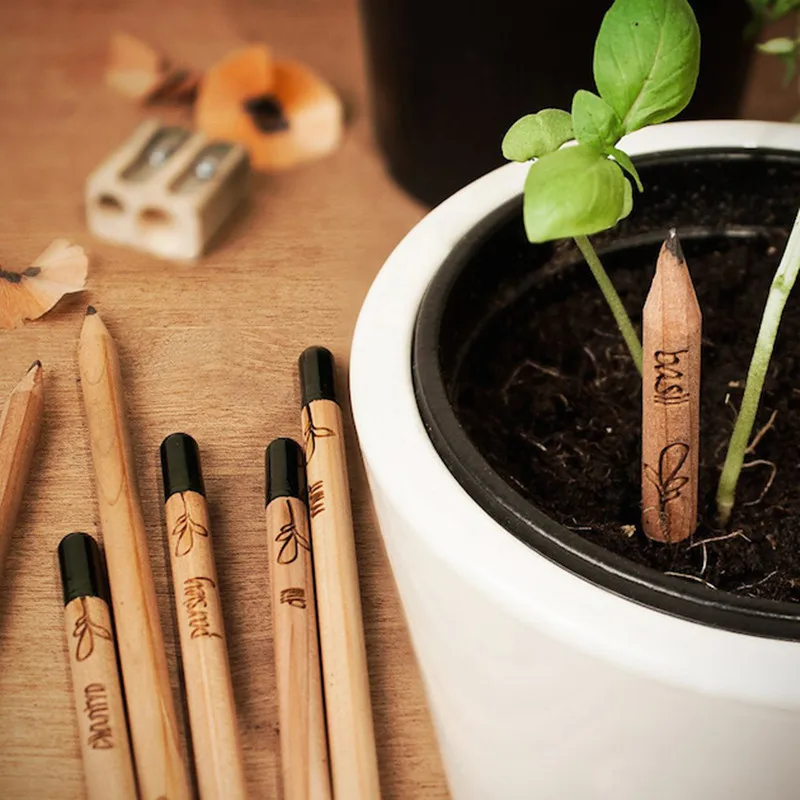
  Sprouts 7, is a pencil brand that makes pencils which when used up can be planted to grow into plants. 
Pencil stubs when planted in a pot grows into a plant: flowering plant or a herb


Britain’s ‘MADE TO LAST’ 8 is a company that makes utility items with at least 1 year warranty. Some of their items have a warranty period of 10 years! People shop on price to a large extent as it is easy to measure. The true value of a product however also depends on its life span. The made to last website allows you to shop by price, category and even by warranty. Manufacturers need to take responsibility for their product quality and asking them to account for the longevity of their products and description of the product source: organic or genetically modified (GMO) lets us make informed choices. Let us all join hands at demanding products that are sustainable and if you ever need help to break from ‘shop-a-hol-ism’ consider those four factors: cost, time, maintenance and space as antidote against purchase.

References
2.  Pappco: https://www.pappcoindia.com/
 3.  Bollant: http://www.bollant.com/
5.  Leaf republic: http://leaf-republic.com/